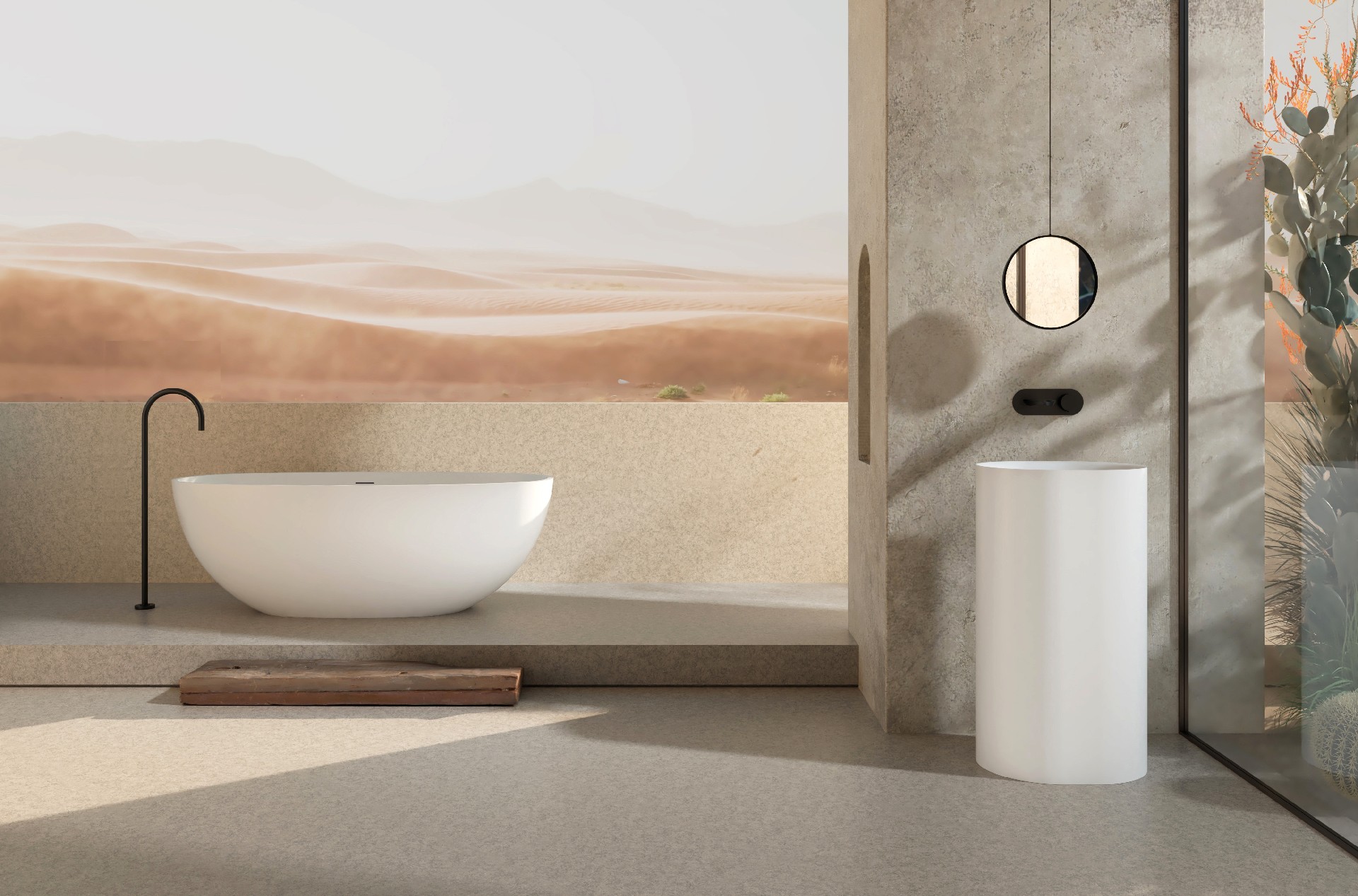
When it comes to creating a comfortable bathroom space, solid surface bathtubs are highly favored by consumers due to their unique advantages. However, with so many products on the market, how do you choose a high-quality solid surface bathtub? Here are some key points to consider.
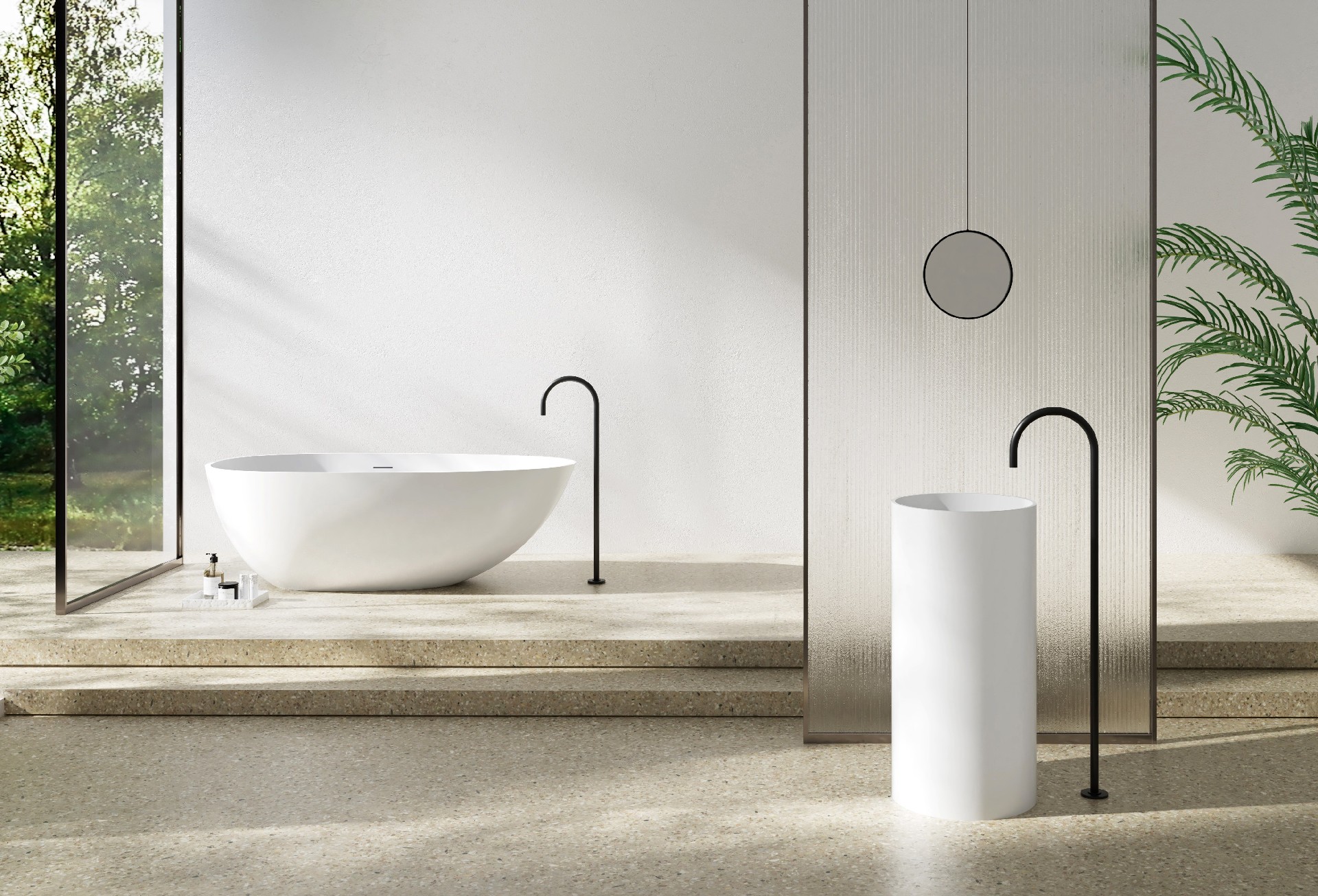
1. Focus on Material Quality
Artificial stone bathtubs are made from natural mineral powders, polymer resins, and pigment additives. Common types include pure PMMA acrylic, composite acrylic, and calcium powder polyester.
Pure PMMA solid surface contains no formaldehyde, boasts high density, strong stain resistance, high hardness and strength, excellent weather resistance, slow aging, and minimal yellowing over time, ensuring a long service life. However, once yellowed, it is difficult to repair.
Composite acrylic offers high cost-effectiveness with a lifespan of approximately 5-8 years. It can be repaired if yellowed or severely scratched, allowing for reuse.
Calcium powder polyester is inexpensive but inferior in quality, with scratches being difficult to repair.
To assess material quality:
- Smell for odors—a faint or strong resin smell indicates poor quality.
- Touch the tank surface—smooth without powder residue, with an even interior free of cracks or imperfections, is optimal.
2. Aesthetic Considerations and Compatibility
Artificial stone bathtubs can replicate the appearance of various natural stones, offering rich textures and diverse colors to suit different interior design styles.
When selecting a bathtub, ensure its design harmonizes with the overall spatial aesthetics. For instance, modern minimalist styles pair well with clean-lined designs, while European classical styles complement bathtubs featuring intricate carvings or decorative molding.
3. Prioritizing Comfort Experience
Bathtub designs should adhere to ergonomic principles, providing excellent body support. Before purchasing, test the tub by sitting or lying in it to ensure its dimensions fit reasonably within your bathroom layout without making the space feel cramped.
Additionally, consider bathing comfort factors such as water temperature retention. Solid surface materials offer superior thermal properties, effectively slowing water temperature decline and enhancing bathing comfort.
4. Installation and Maintenance Considerations
Some solid surface bathtubs are heavy and may require additional support or professional installation. Before installation, verify the bathroom floor's weight-bearing capacity and reinforce it if necessary. For routine maintenance, the smooth, flat surface of solid surface bathtubs resists dirt buildup, typically requiring only water and a neutral cleaner for wiping. However, avoid using strong acidic cleaners to prevent surface damage.
5. Planning Budget Costs
The price of solid surface bathtubs varies significantly based on factors such as material, brand, and craftsmanship. They are typically more expensive than acrylic or fiberglass bathtubs but offer superior durability and aesthetic appeal. When purchasing, compare prices across different products and consider long-term cost-effectiveness, including lifespan and maintenance requirements. While the initial investment may be higher, a high-quality solid surface bathtub can reduce future replacement and repair costs.
If you're looking for the perfect solid surface bathtub for your home, browse our website and filter products based on your specific needs.