
I. Basic Guide to Freestanding Bathtubs: What Exactly Are They?
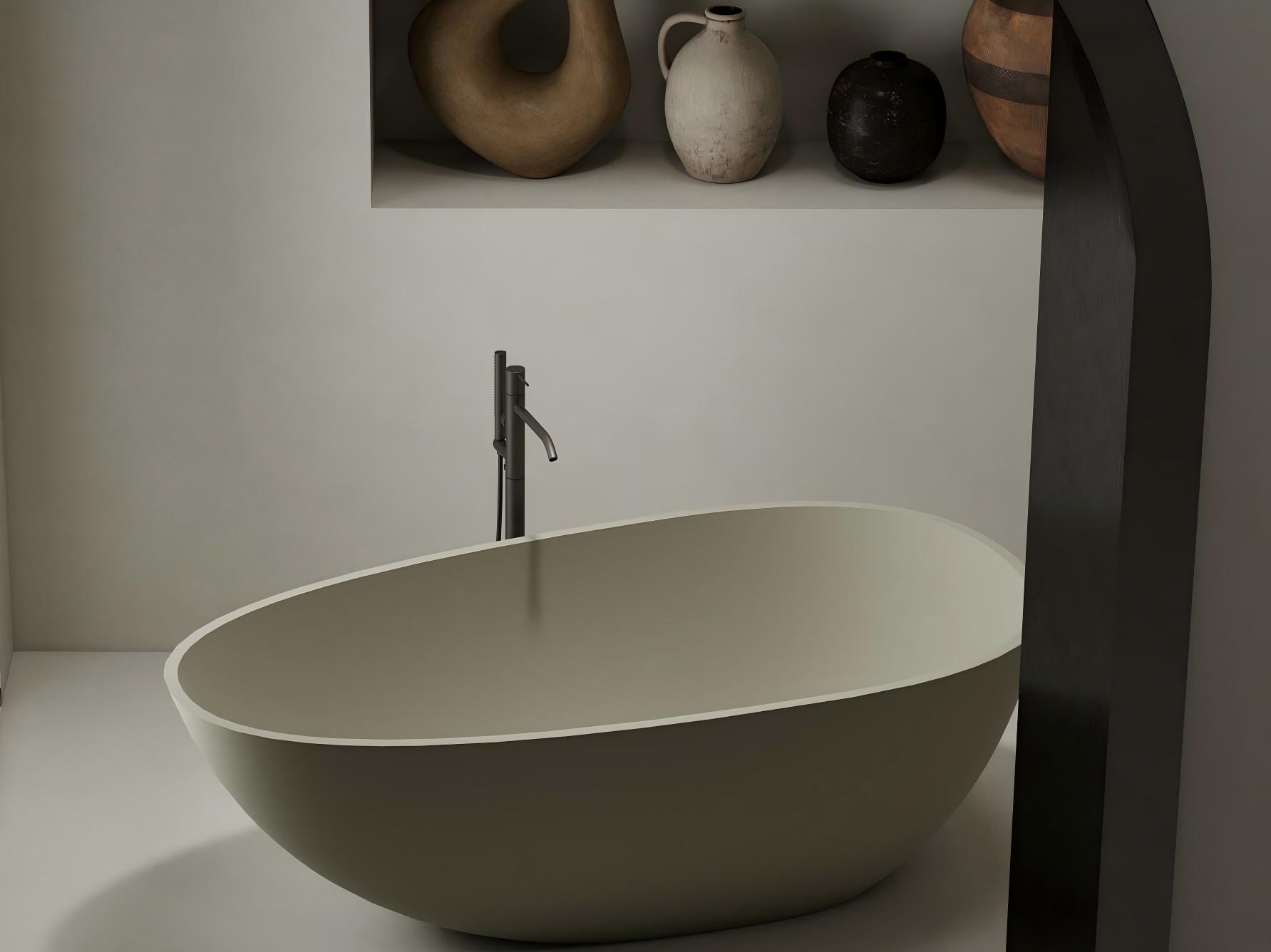
A freestanding bathtub refers to a bathtub that is not placed against a wall, is not built into a countertop, and stands completely on its own. In recent years, they have become increasingly common in mid- to high-end home renovations, boutique hotels, and bed-and-breakfast projects in China, but they are not a new product—they have been popular in European and American markets for decades.
Common Material Categories for Freestanding Bathtubs
Acrylic bathtubs: Lightweight and affordable, but the surface is prone to scratches and may lose its luster over time;
Cast iron enameled bathtubs: Sturdy and durable, but extremely heavy, and the enamel surface is difficult to repair once chipped;
Ceramic bathtubs: Have a glossy finish, but conduct heat quickly, causing the water to cool rapidly, which detracts from the bathing experience;
Engineered stone bathtubs: Made from a composite of eco-friendly materials such as resin and pure aluminum powder, they have a warm, smooth texture, excellent heat retention, and a wide range of design possibilities. They are currently one of the mainstream choices for hotels and real estate projects overseas.
Key Advantages of Engineered Stone Bathtubs
Outstanding heat retention: With a low thermal conductivity, hot water cools slowly, and heat retention lasts significantly longer than in ceramic bathtubs, eliminating the need to add water mid-soak;
Smooth, Warm Feel: Unlike ceramic or metal, they don’t feel cold to the touch in winter, and the sound of water hitting the surface is quieter;
High Design Flexibility: Available in round, oval, square, and custom shapes; edges can be polished to a smooth curve, eliminating sharp corners to prevent bumps and scrapes;
Easy to Clean and Stain-Resistant: The material has minimal pores, making it difficult for soy sauce, coffee, and personal care products to penetrate; daily maintenance requires only a damp cloth and a neutral cleaner;
Durable and Repairable: More resilient than ceramic or glass; minor surface scratches can be sanded out without replacing the entire unit, with a typical service life of 10–15 years.
II. Market Trends: Freestanding Bathtubs Are Transitioning from Hotel Exclusives to Standard Home Features
Overseas Market Demand Continues to Grow
Demand for engineered stone freestanding bathtubs is steadily rising in the European, North American, and Australian markets, particularly in hotel construction and high-end residential projects, where requirements for material sustainability and certification are becoming increasingly stringent. EU CE certification, North American ICC-ES certification, and CUPC certification have become prerequisites for entering these markets.
Market Pain Points Remain Pronounced
Significant price premiums cause budget-conscious customers to hesitate;
The heavy weight of finished products leads to high shipping and installation costs;
Long lead times for non-standard custom orders result in unpredictable project timelines;
Low-cost calcium powder-based engineered stone is porous, prone to staining and mold, and has tarnished the category’s reputation.
Selecting the right source manufacturer is key to resolving these pain points.
III. Guide to Avoiding Pitfalls: These Pitfalls Must Be Avoided
Pitfall 1: Calcium Powder Formulations Masquerading as Aluminum Powder Formulations
Calcium powder engineered stone is low-cost but has a loose texture, is prone to staining and mold, and feels rough to the touch. How to identify it: Examine the texture of the cross-section—aluminum powder formulations are finer and denser; request third-party test reports from organizations such as SGS.
Pitfall 2: Focusing Only on Appearance, Not on Certifications
For export products, always verify the authenticity of certifications. Certification numbers from legitimate manufacturers can be verified on the issuing authority’s official website; for example, ICC-ES PMG series certifications and CUPC certifications are both archived with corresponding numbers.
Pitfall 3: Ignoring the Risk of Color Variation Between Batches
When purchasing in bulk for construction projects, if a manufacturer’s color paste control is inconsistent, color variations between batches may occur during replenishment orders. It is recommended to clearly define color variation acceptance standards in the contract and require the manufacturer to retain standard color swatches.
Pitfall 4: Failure to Include the Customization Lead Time in the Contract
Non-standard sizes, irregular shapes, and color changes all require scheduling. Verbal commitments regarding lead times offer no guarantees; be sure to include these details in the contract and stipulate penalty clauses for breach of contract.
Pitfall 5: Trusting Uncertified, Low-Priced Products
Low prices often mask substandard environmental compliance and poor resistance to yellowing. Long-term use can cause yellowing and dulling, which are nearly irreversible.
IV. Industry Opportunities: Who Will Benefit from This Round of Upgraded Demand
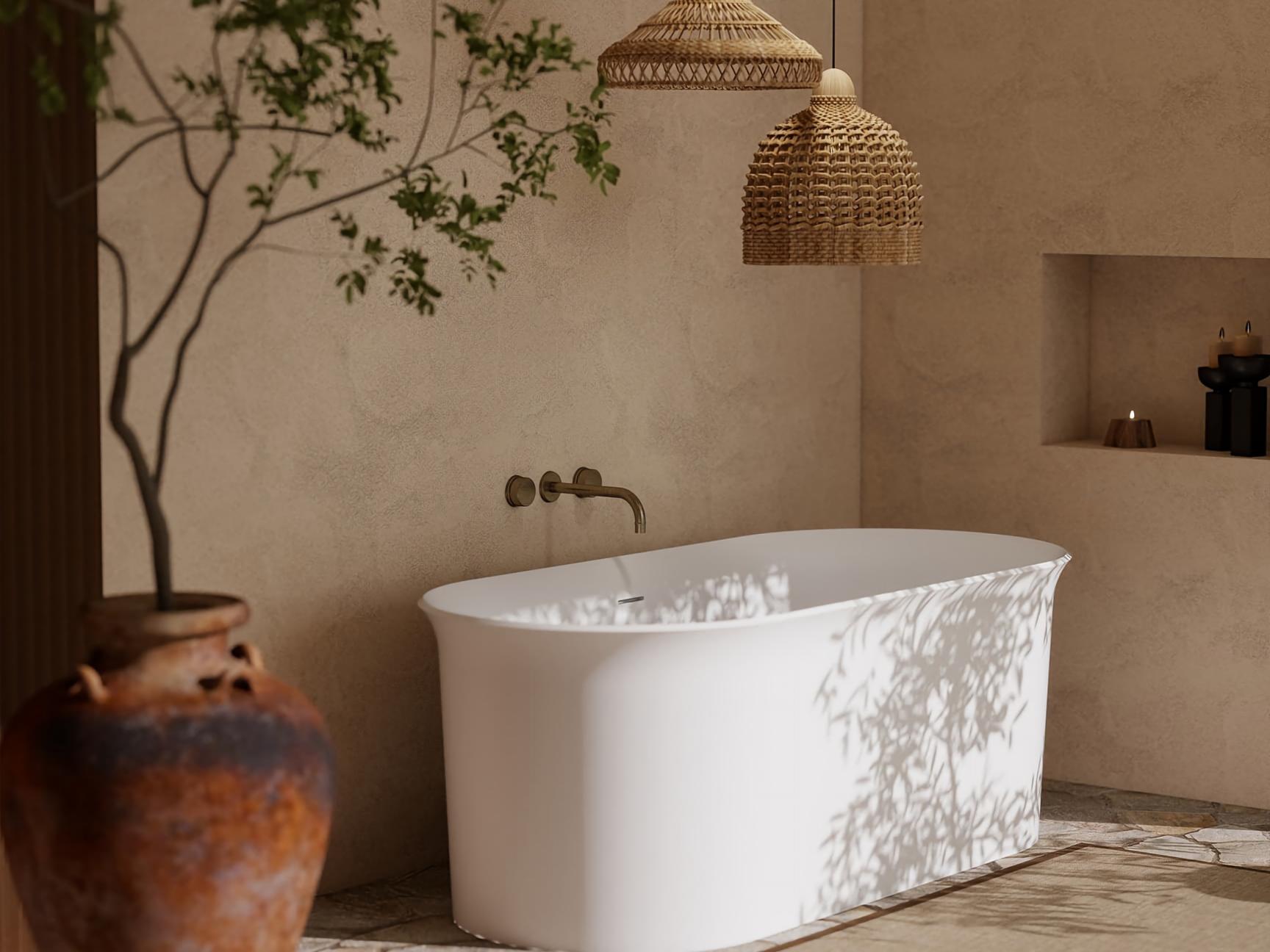
Cross-border sellers and foreign trade companies: Overseas hotels and real estate projects continue to procure engineered stone bathroom fixtures; source factories with certifications and production capacity are a scarce resource.
Hotel and real estate buyers: One-stop customization and fulfillment reduce intermediaries and ensure higher project quality.
Vacation Rental and Apartment Operators: Cost-effective freestanding bathtubs have become a key feature for increasing room premium;
Designers and Interior Design Studios: Engineered stone allows for seamless, one-piece vanities and custom shapes, offering far greater design flexibility than traditional materials.
V. FAQ: Frequently Asked Questions Explained in One Go
Q1: Are freestanding bathtubs suitable for small apartments?
Yes, but load-bearing capacity and space must be assessed in advance. Engineered stone bathtubs weigh between acrylic and cast iron. For small apartments, we recommend compact oval models; verify floor load capacity and entryway width before installation.
Q2: Do engineered stone bathtubs stain?
Products made with an aluminum powder formula and minimal porosity are resistant to everyday stains such as coffee and personal care products. Avoid models made with calcium powder, and do not allow hair dye or dark-colored liquids to remain on the surface for extended periods.
Q3: What should I do if the surface gets scratched?
Shallow scratches can be repaired by sanding and polishing, which will restore the surface to its original appearance—there’s no need to replace the entire unit. This is a key maintenance advantage of engineered stone over ceramic and glass.
Q4: Can I use 84 Disinfectant or toilet cleaner to clean it?
No. Engineered stone should be wiped down with a damp cloth using a neutral cleaner or regular dish soap. Strong acidic or alkaline cleaners can cause the surface to lose its luster and become dull.
Q5: Does the water temperature drop quickly when taking a bath in winter?
Engineered stone has low thermal conductivity and retains heat significantly longer than ceramic bathtubs. During a normal bath, you generally won’t need to add hot water midway through.
Q6: Is the minimum order quantity (MOQ) high for OEM manufacturing?
Manufacturers typically support custom prototyping. The specific MOQ depends on the manufacturing process and materials used; we recommend contacting the factory’s sales team directly to confirm.